


As an estimated 443,000 people age 12 and older experience sexual violence each year in the U.S., movements that spread awareness are vital to providing support to survivors and communities.
One of those movements is Sexual Assault Awareness Month, which takes place in April.
This year marks the 25th anniversary of SAAM, and Morgan Parslow, prevention educator for Kent State’s Sexual and Relationship Violence Support Services, said this month is important because sexual violence is not a rare thing.
“Until that’s not a problem, this is something that we have to keep pushing,” Parslow said. “Survivors are everywhere.”
SAAM was officially recognized in 2001, but it has roots in the civil rights and women’s movements.
In the ’40s and ’50s, efforts to discuss the reality of sexual assault were limited but were championed by women of color. The efforts spread around the 1970s, bringing more awareness and support for survivors, and the first rape crisis center was founded in 1971.
SRVSS has been active on campus to spread awareness about the month as well as the resources they offer for students and the community.
Parslow said each week of April they have tabled with different themes including roots of the movements, centering survivors’ stories, prevention involving bystander intervention and the future of the movement.
Additionally, SRVSS hosted its Denim Day Fashion Show on April 29. Denim Day is an international form of protest on the last Wednesday of every April that started in Italy in 1992.
An 18-year-old girl was raped by her 45-year-old driving instructor, and he was arrested and prosecuted. Later, the rape conviction was overturned by the Italian Supreme Court, and it argued, “because the victim wore very, very tight jeans, she had to help him remove them, and by removing the jeans it was no longer rape but consensual sex.”
The women of the Italian Parliament were upset and wore jeans to work in protest and in solidarity with the victim.
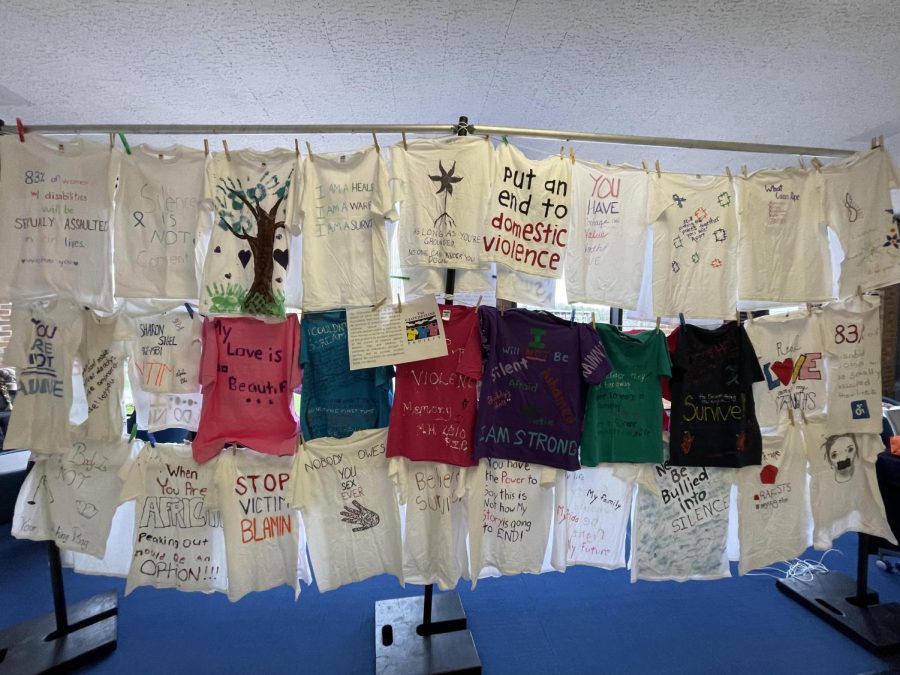
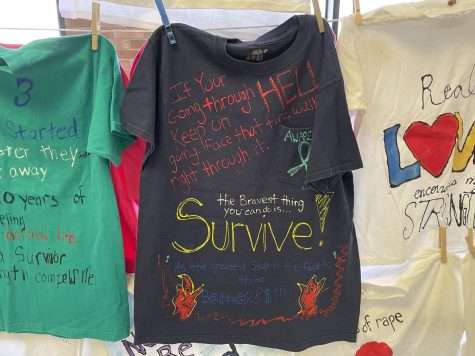
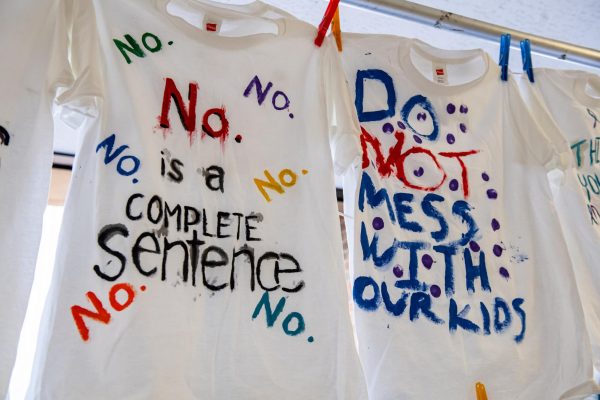
SRVSS also held the “What Were You Wearing” exhibit in the Center for Visual Arts the first week of April and held it again the last week of April in Oscar Ritchie Hall.
The exhibit is a collection of real-life stories submitted by survivors explaining what happened to them and what they were wearing. SRVSS then thrifts the clothes they described to hang next to the survivors’ stories. Examples of clothes they’ve shown
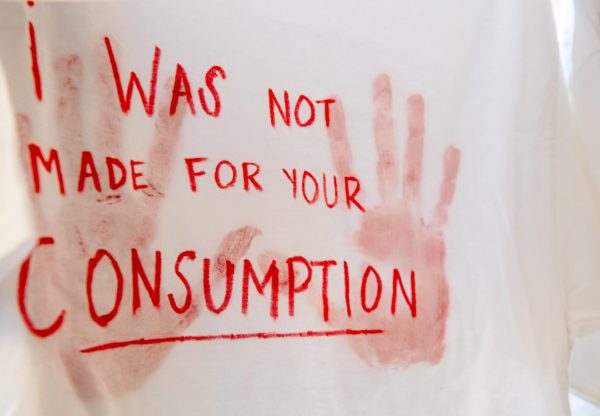
are a prom dress, a hospital gown and a young girl’s nightgown.
“It really just shows that clothes do not matter,” Parslow said.
Although Parslow has also heard that many students do feel safe on campus and in the community, SRVSS still sees a lot of students utilizing its resources.
Another resource for survivors on and off campus is Townhall II, an integrated health network for Portage County providing emergency services, prevention education, counseling and the rape crisis center for the county.
Ellianna Crumley, an advocate in the Victim of Crime Advocacy department of Townhall II, said spreading awareness allows people to understand the varying aspects of assault, as many believe it only looks one way.
Parslow also said there is a stigma around talking about sexual violence; however, the more people talk about it, the more likely survivors will feel they can come forward and share their experiences or get help.
“My biggest thing working in this field and just as an advocate, as a survivor for fellow survivors, it’s trying to get rid of that stigma that this is not a rare thing; it should be, this should not be as normal as it is, but it is,” Parslow said. “Survivors are here, they are all around you,”
Crumley said advocates are always there for those who need to talk.
“I think the best way is to talk about it, whether it’s with someone you trust, a therapist, a counselor, an advocate, even just calling the helpline and talking about it,” Crumley said.
SRVSS and Townhall II both prioritize the survivors needs when providing help, offering support for immediate crisis from walk-ins, phone calls and email.
For walk-ins at SRVSS, Parslow said they have a small room for students to go right into without having to pass through the building.
“We wanted to keep their privacy and their autonomy,” Parslow said. “That’s very important to us, giving them that power to make that choice.”
Similarly, Crumley said anyone calling the Townhall II helpline stays anonymous.
Advocates at both places work with survivors depending on the next steps they want to take, whether that is just talking with someone, going to the police station, court or hospital.
“Our biggest thing is we don’t want to pressure them into anything, it’s all under [their] control because they had no control for so long,” Crumley said.
Along with awareness and support, prevention is another big aspect of sexual violence and Parslow said is the main goal of SRVSS.
For this, they provide prevention education through bystander intervention training and workshops on consent, healthy relationships, warning signs of abuse, dynamics of harm and cycles of abuse.
For those that the topic of sexual violence feels heavy for, but want to get involved, Parslow said to remember why the topic is important and to start small by attending an event, sharing a post or start volunteering.
“Bringing light to that and awareness to that is incredibly important, especially now,” Parslow said. “We have a lot of hate going on in the world and I think we need to perpetuate a … safer world.”
SRVSS is located in the Williamson House at 1200 Main St., but will be moving to the Student Center, room 228, at the end of the spring semester. It can be reached at 330-672-8016.
Townhall II is located at 155 N Water St. and its helpline is 330-678-4357.
Savana Capp is a beat reporter. Contact her at [email protected].