


There are 858 active wildfires currently raging in Canada, with 192 being classified as out of control. Here’s what to know.
As of Wednesday, Canada’s Natural Resources announced that it had 835 active wildfires. The concentration is in Saskatchewan, Ontario and Manitoba. So far in 2026, Canada has had around 1.9 million hectares burned.
The current wildfire season is comparable to the worst wildfire recorded in Canadian history, the 2023 season. That year, Quebec experienced 700 wildfires alone, with 7,024 total wildfires. Burning over 18 million hectares of land.
The second-worst season is 2025, with 5,647 recorded fires. Last year, 8.9 million hectares of land were lost to wildfire.
With three major wildfire outbreaks, why is Canada seeing so many record-breaking wildfires in such a short time?
The truth is, the fires are caused by climate change in the boreal forest regions of Canada. The warmer, drier weather conditions cause the native vegetation to dry up, making it more susceptible to catching fire when hit by lightning or human activity.
In 2022, a drought was recorded in Western Canada, kicking off that wildfire season.
Wildfires affect the air quality due to the large amounts of smoke and ash released into the atmosphere. Toronto reported the worst air quality in the world on Wednesday.
Now, the upper Midwest, the Northeast, and the Great Lakes region are experiencing air quality levels up to 500, being extremely hazardous for all groups involved. Major cities like Cleveland, Detroit and New York.
Many sources recommend wearing masks if needed to leave the home.
Isabelle Walter, barista at Scribbles Coffee Co., noticed more individuals choosing to be inside rather than braving the air quality.
“I think we’re seeing more business from the weather,” she said. “Normally we would have a lot of people outside. Normally, we have more space.”
Walter also noted how the air quality was a mystery to her.
“I could not believe it when I walked outside; it smells so weird; it smells like chemicals!” Walter said. “I didn’t even know this was happening; I had to do more research to figure out [what was happening].”
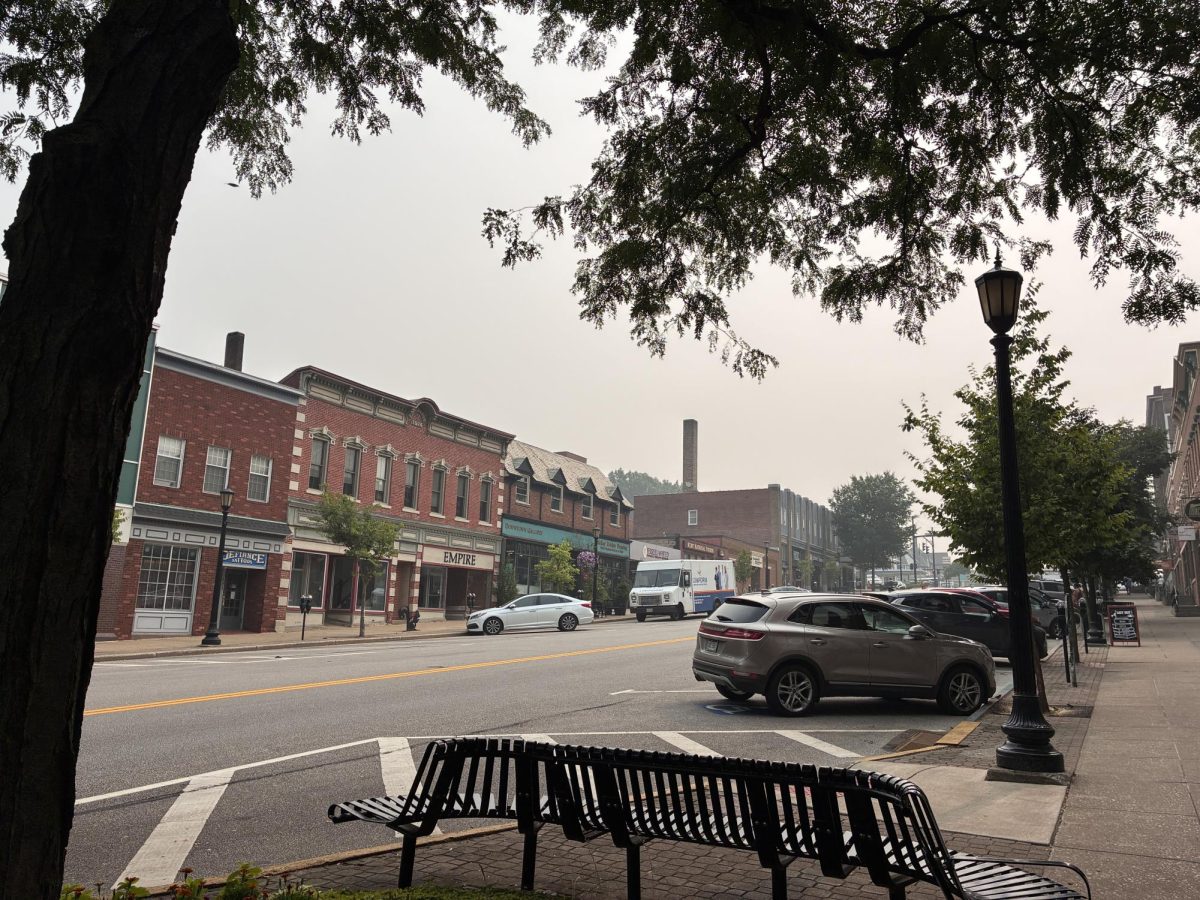
As of 11 am, Kent’s air quality is at 170aqi, meaning unhealthy for most citizens. Some even remarked on seeing the ash flying in the air from the fire, along with a fiery orange-grey sky.
Wildfire smoke is set to worsen throughout the rest of the week, but is expected to begin lifting by Saturday or Sunday.
For fire smoke safety, you can opt for a mask to filter the smoke. Choose to stay inside for as much time as possible, and avoid opening windows.
If you have any outdoor pets, choose to bring them inside. If you are immunocompromised or have any lung-related allergies or diseases, follow and keep track of symptoms. If you have worsening symptoms, visit a healthcare provider for treatment.
For more information, the Canada Interagency Forest Fire Centre has interactive maps of fires. For wildfire safety, you may visit the CDC’s resources on fire smoke.
Karmyn Allen is a staff writer. Contact her at [email protected].