


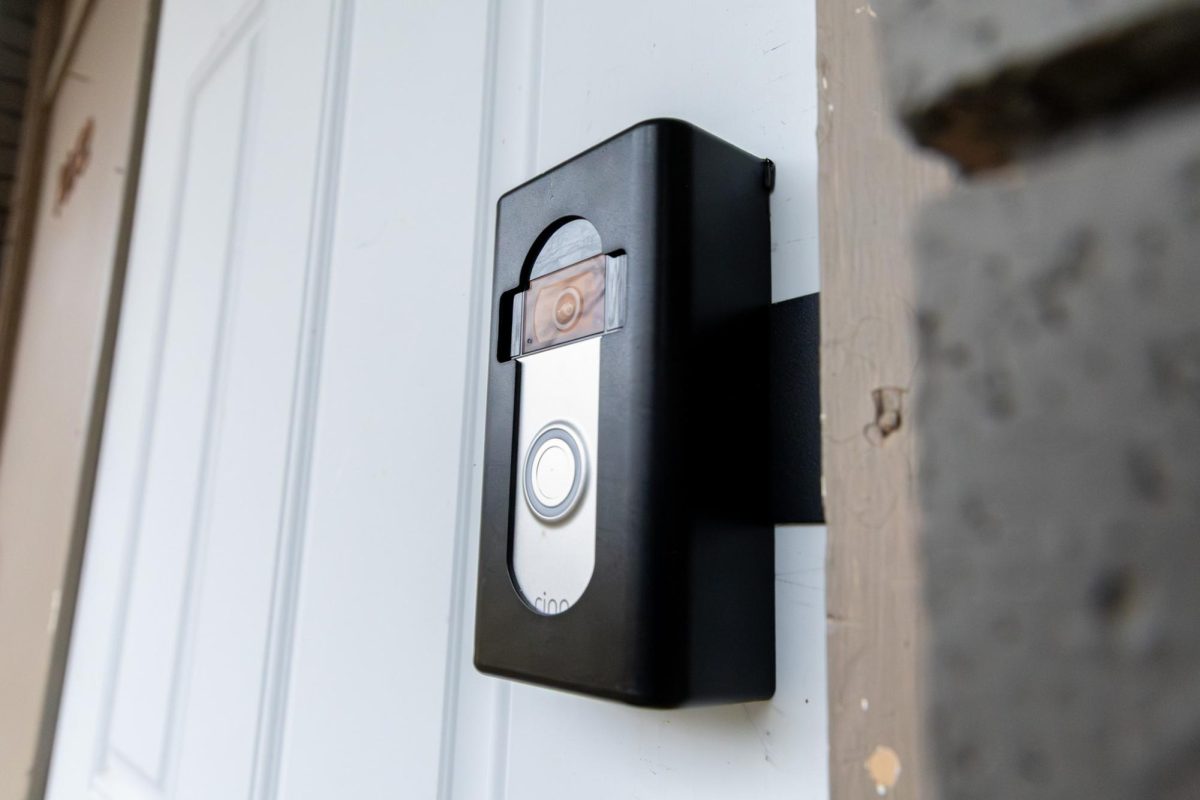
Fear-plagued social media after the Super Bowl Ring doorbell ad ran a campaign for their Search Party feature, one that allowed you to share your camera footage with your neighbors. With the Apple AirPods cameras, many worry that our future will resemble that of a dystopian novel.
In response to many calling America a surveillance state in the making, Ring’s founder, Jamie Siminoff, made claims for future adjustments that appear to be nothing more than a straw man fallacy.
Instead of addressing people’s concerns about artificial intelligence constantly surveying neighborhoods through Ring camera footage, Siminoff said that, to prevent people from being “triggered” in the future, Ring would avoid using maps in future advertisements. Not only is Ring avoiding the original concern by attacking a similar-sounding critique instead, but the underlying implication is that there will still be cameras located in mass numbers; the company will just hide this fact to avoid citizen concern.
Companies thrive when the public is oblivious; this means that they can do things that they know would cause discomfort and fear.
Furthermore, a spokeswoman for Ring said the company would share footage only via the Search Party feature if the customer consented. This means whether or not you choose to share footage with your neighbors to help the search for a lost dog, the intended use of the Search Party feature is up to you.
The question most people need to come to terms with is not what their neighbors will be doing with their surveillance footage, but how companies will use it and why they need constant surveillance footage in the first place.
Although, Ring’s terms and conditions state that the company can still have access to the footage and show it to American and foreign law enforcement if forced to comply.
Ring has been able to access your footage for years, so the uproar is not due simply to the company accessing your data.
In a perfect society, there would be no porch pirates, dangerous strangers or burglars. But there are, and while data scientists are still debating how much Ring cameras actually deter, they may indeed help catch perpetrators after the event. For years, while some felt uncomfortable with their neighbors’ surveillance cameras, many were fine with them.
The Ring Super Bowl advertisement was one of many AI-related advertisements, showing how the state of our economy has become dependent on the AI bubble. It will make subjects, like lost dogs, in camera footage easier to detect.
But with AI data centers using hundreds of thousands of gallons of water every day, taking over land in rural communities, and generative AI producing dangerous deepfakes and leading to cognitive decline, these ads leave a bad taste in many people’s mouths.
Not to mention the ICE agents going door to door searching for illegal immigrants, leaving many unnerved and controlled.
The way the cameras themselves operate is, for the most part, nothing new; it was just a reminder to many Americans how much power corporations and the government have over them, along with the slight alterations in increasing surveillance over time.
Emilia Jacobson is a columnist. Contact her at [email protected].

