


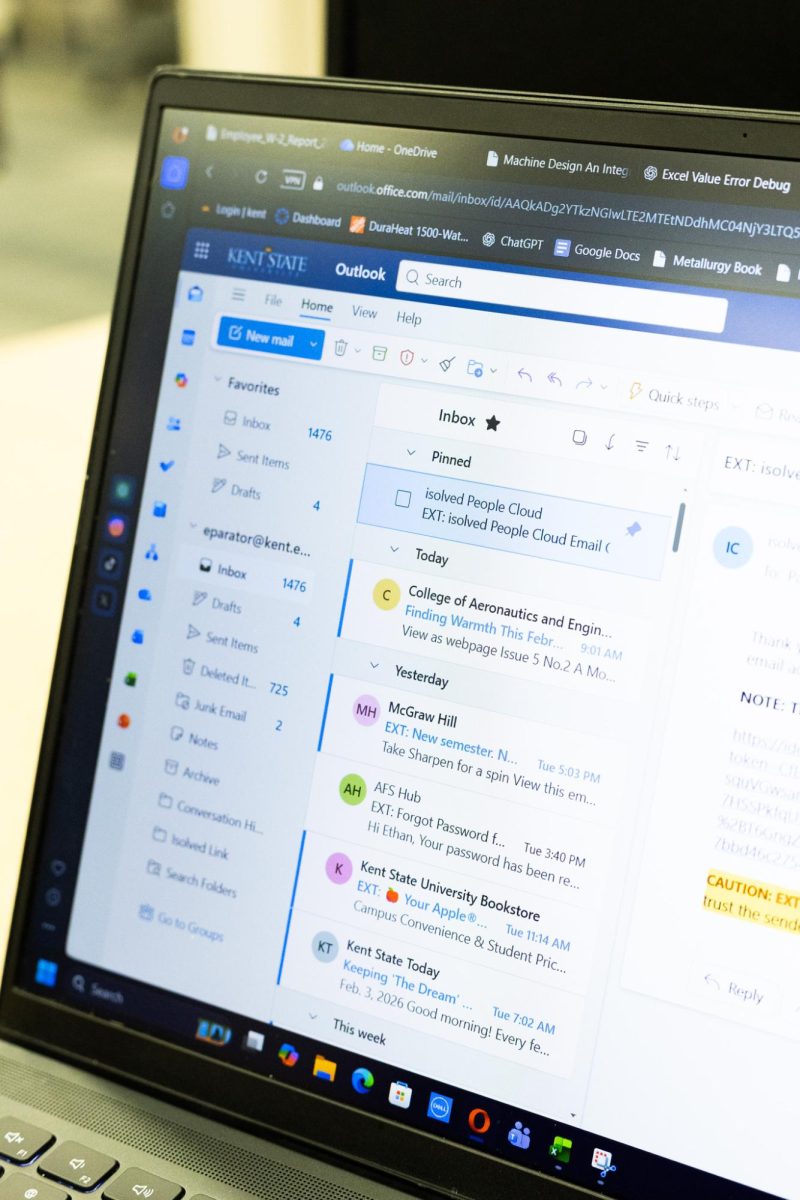
Missing one email may not seem like a big deal. However, at Kent State, a skipped message could mean losing financial aid, missing an internship opportunity or being unable to register for classes.
Emails may feel like background noise, but university IT officials say ignoring messages can have academic, security and financial consequences. With students receiving a high volume of email daily, experts say learning to manage inboxes and scams has become essential.
“Folks get a little bit exhausted by things going on,” said Walter Bainey, director of infrastructure engineering information technology. “It comes down to the volume, the amount of messages you get on a daily basis. There’s just a lot.”
When students feel flooded with emails, the volume often determines whether they engage with a message or ignore it.
“A lot of times, they might see that it’s from someone they know,” Bainey said. “The sender is someone they regularly communicate with, like a friend or professor. There’s some sort of relationship where they’re expecting something from that person.”
Even when students open an email, its length often discourages them from reading it.
“If they do open a message, sometimes it’s a matter of the length,” Bainey said. “Like, if it’s a book of stuff, they may not have time. They might think, hey, I’ll go back to this, and then they may never go back.”
Ignoring certain types of emails can have long-term consequences.
“Financial aid, some of the scholarship and grant stuff,” Bainey said. “You know, it’s important that you respond to that.”
Bainey added that advising emails are especially important to look at.
“If you’re in a curriculum where you need to meet with an advisor to schedule classes and you don’t respond to that message, you can’t register for classes,” he said. “That can definitely create challenges down the road.”
Beyond academic and financial concerns, security risks add another layer of urgency. Kimberly Price, security access management specialist, said students who rush through their inboxes are especially vulnerable.
“Students aren’t really paying attention to what they’re opening,” she said. “When they’re in a hurry, they can end up receiving phishing attacks, fake job offers and malicious links in attachments.”
As phishing attempts grow more advanced, Price urged students to take a more proactive approach.
“Students really need to understand what to look at in an email to determine if it’s a phishing attempt or if it’s legitimate,” she said. “The bad guys are getting smarter and better. Some of the emails look so real that we have to dig deeper to find out it’s a sophisticated phishing attempt.”
To help students stay protected, the university maintains the Secure IT “Fight the Phish” page and the “Phishing and Scams” resource page that highlights recent scams and warning signs.
“We update the page with the newest scams we’re seeing and provide a list of tips on what to look for — the sender’s email address, the subject line and details throughout the body of the message,” Price said.
She encouraged students to verify suspicious emails before interacting with them.
“Students have to learn to look for the red flags,” Price said. “Before you click anything, you can always check with the phishing team. Send it to us and we’ll analyze it and tell you if it’s legitimate.”
Cybersecurity threats are increasing, but Chris Klinger, lead systems administrator, says simple organizational habits can help reduce stress and prevent problems.
“There are a number of tools within Outlook that can help minimize the mess, things like inbox rules, block lists and spam filters,” he said. “A lot of people just use the inbox, but folders and regularly checking your email makes it much less overwhelming.”
Ultimately, email habits vary among students. Building simple habits can prevent small oversights from turning into major setbacks.
“Everyone is different in how they consume email,” Bainey said. “Some people are very regimented and have a folder for every message, if it doesn’t fit, they delete it. For others, it’s the Wild West and everything stays in their inbox indefinitely.”
Savannah Carroll is a hard beat reporter. Contact her at [email protected].

