


Not long ago, there was a time when Mid-Major programs in men’s college basketball could compete and hang around with the blue bloods. Think back to the early 2010s, when Butler University went to back-to-back national championships under coach Brad Stevens. In 2008, the Memphis Tigers came storming out of Conference-USA en route to the national championship game.
Both the Bulldogs and Tigers were led by future NBA stars Gordon Hayward and Derrick Rose. The Tigers also had future Los Angeles Clippers forward Chris Douglas-Roberts, and the Bulldogs had point guard Shelvin Mack, who embarked on an eight-year career in the league.
But what if these players never found their way to the smaller programs? What if Hayward and Rose started out at Duke and Kansas? Instead of playing the majority of their careers in the Horizon League and CUSA, what if Mack and Douglas-Roberts left midway through their collegiate careers in search of a larger role on a larger program – and a larger check.
This is the reality programs like Kent State and other mid-major teams have now found themselves in. Without the resources and opportunities to compete, teams in the Mid-American Conference are losing their best and brightest young athletes to the transfer portal in 2026.
Just this offseason, coach Rob Senderoff saw six of his players leave Portage County by way of the portal. That includes junior guards Jahari Williamson and Cian Medley, as well as All-MAC First Team big man Delrecco Gillespie, who went all the way to the Big 12 to play for Houston. Williamson made the jump to Pepperdine University while Medley went to East Carolina University.
It’s not just the Flashes who are hurting bad. The Miami RedHawks finished this past season with an astonishing record of 32-2 and have already lost star players like Brant Byers to Penn State and Eian Elmer to Wisconsin.
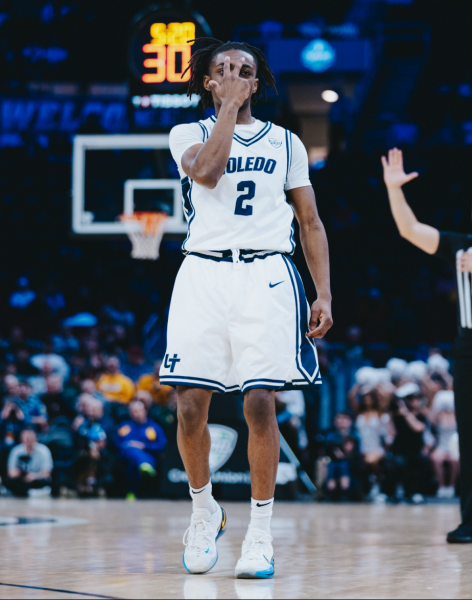
As for the Toledo Rockets, the team will have to say goodbye to both Leroy Blyden Jr. and Sonny Wilson after losing the conference championship in a 79-76 heartbreaker against the dynastic Akron Zips. Blyden Jr. took his talents to Kansas while Wilson went to South Florida.
What’s especially sad for all three of those programs is that they were so close. The Rockets were a shot away from March Madness. Miami had arguably the best season it has ever had in program history and now has to start back from square one.
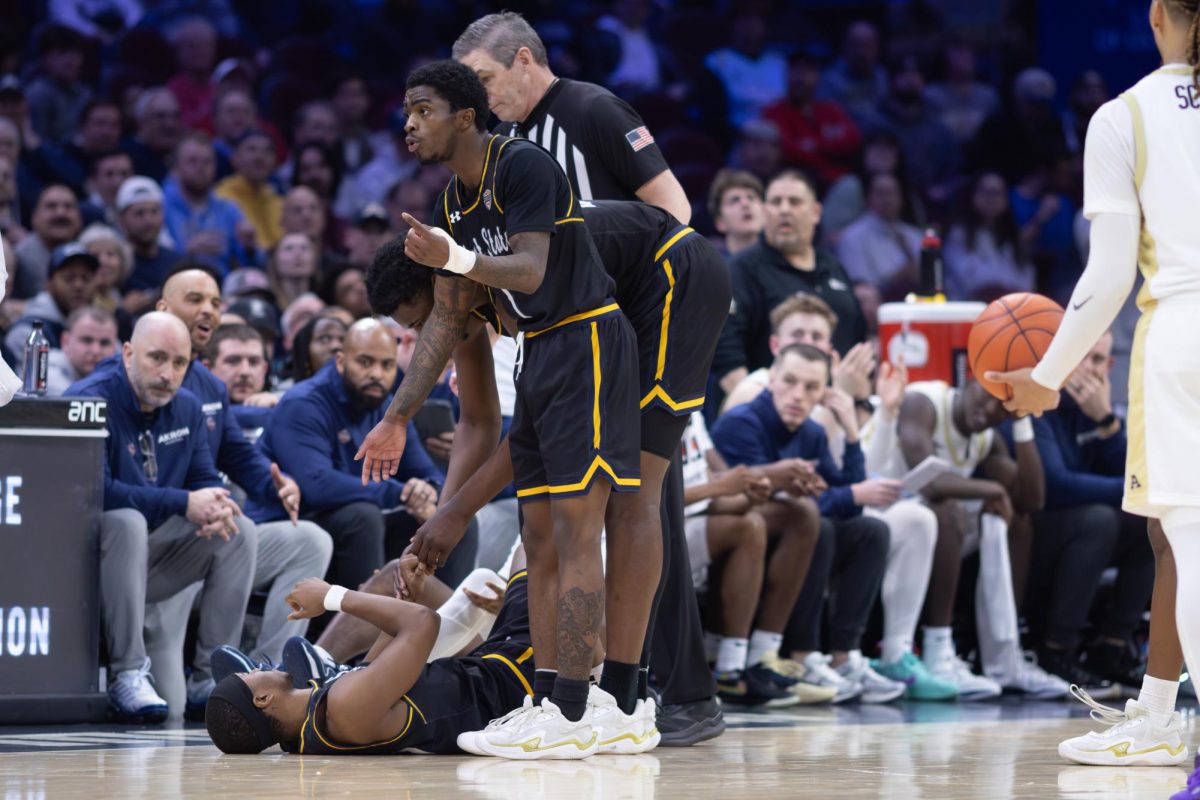
As for KSU, it finished the 2025-2026 season with one of the best home records in program history and only lost four conference
games.
Other programs like Akron, Buffalo, UMass and Bowling Green have also suffered tough portal losses. As of April 2026, seven members of the MAC All-First, Second and Third Teams have transferred to other schools or have announced their intentions to transfer.
An anonymous MAC sports information director discussed how the conference has been affected by the transfer portal. They said the pace of players transferring is their biggest challenge with the transfer portal.
“The nature of the portal has essentially extended the season further into the spring because of needing to create graphics, releases, etc. for new signees and or ‘he’s back’ for returning players,” they said. “I used to look forward to April when I could finally focus on spring sports, which are essentially put on the back burner until basketball season is over, but now with the announcement of at least half of a new team (or more) every spring, it is taking away time I used to dedicate to spring sports.”
This staff member is touching on something that goes overlooked by most fans. While collegiate men’s basketball is nothing more than a hobby or a fun thing to look at for most people, for people like this SID, it’s their entire livelihood. They have to work day and night to make sure the needs of athletes are squarely met. A lot of these staff members are also in charge of social media accounts, meaning they have to keep up with the never-ending cycle of posting and updates.
In the era of the transfer portal, nothing stops moving in the world of college basketball. As a result, the coaching and communications staff must comply.
The SID also discussed their frustration with the “lawless nature” of the transfer portal.
“I don’t blame any student-athlete for going out and getting what someone is willing to pay them, but having players who can be at different schools every year over the course of a four or five-year career really takes away from the college experience and the ability for alumni and fans to connect with these programs and players.”

The idea of a lawless collegiate basketball community has been talked about frequently amongst fans, and it’s now found itself at the White House. Earlier this month, President Donald Trump hosted legendary college football coach Nick Saban and other NCAA figures to discuss the current nature of college sports.
As a result, Trump issued a new executive order that gives athletes one free transfer over a five-year career – if the athlete decides they need a second transfer decision, they must sit out a year.
Just like the SID said, not only does the transfer portal take away tremendous talent from teams like the Flashes and RedHawks, but it’s also long been argued that it takes the fun out of college sports. With so many careers similar to that of Rose and Hayward going the way of the dinosaur, how long will it be until MAC basketball is completely forgotten as well?
Lastly, the SID touched on whether the transfer portal has negatively affected the MAC or other mid-major conferences. Their response: “Without a doubt.”
“It isn’t just limited to mid-majors,” they said. “Even within Power Conferences, players are transferring to programs who are seen as having a better chance to win at the highest level and or for more lucrative NIL deals. Unless rules are put in place to limit transfers again, this is here to stay.”
John Engoglia, Josh Szeremet, Felicity Scott and Luke Nedved contributed to this story.
Gage Wellman is the sports editor. Contact him at [email protected].


Mike S. Sorohan • Apr 27, 2026 at 10:23 am
Excellent article. Well done!