


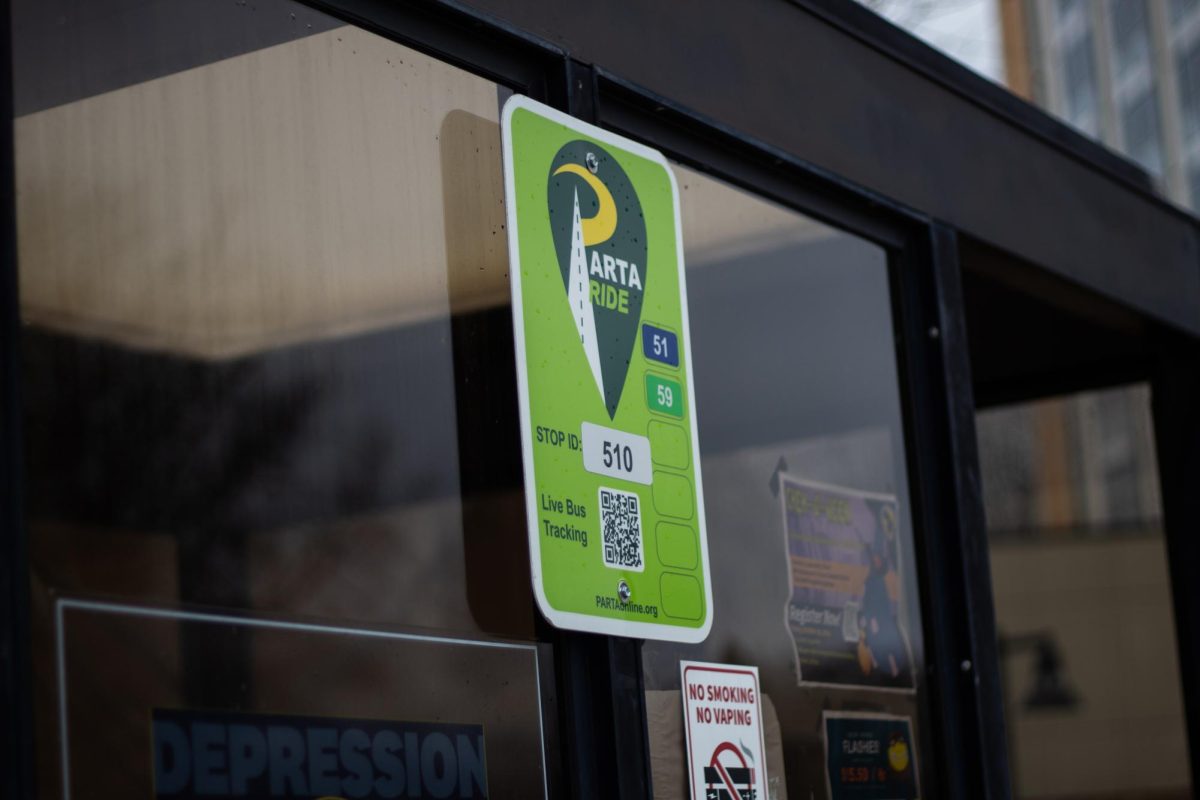
Kent State University offers some transportation services that are usually unavailable at other universities, with freshman-year parking being most notable. However, there are many downsides to the university bus system.
When I visited other university towns, I saw their university buses frequent stores and locations that provided a greater range of transportation for students, even in smaller, more suburban areas than Kent.
Kent State utilizes the county’s bus service and operates under the assumption that many students have a car – which many do. Regardless of how many students own cars, many still require transportation services to get to class, to their car or around town if they do not have a car or parking permit.
The lack of funding for a university-owned bus system limits where the buses travel, how often they run and how many buses there are.
As of 2026, Kent State is ranked the third-largest university in Ohio by enrollment, meaning it receives a generous amount of money every year and a large number of students.
The majority of Kent State students live off-campus, which would imply to many that they wouldn’t need to use the campus bus system that often, but this is not the case for all commuters.
Many off-campus students live along bus route 58, Summit East/Front Campus, and they often use the bus system to get from their off-campus housing to campus. Moreover, route 58 transports students to a commuter lot and Dix Stadium, the university’s largest parking lot.
The bus system’s drawbacks affect certain groups in particular – not only those who take route 58, but also students enrolled in the flight program.
Kent State University’s airport, where students go for lectures and flight classes, is approximately a 15-minute car drive down busy highways into a different town. Students with a car may not experience difficulties, but those who rely on the bus do.
Professional pilot students, such as freshman Landon Weber, have expressed concerns.
“I do not have a car,” Weber said. “I am fortunate enough to have a friend who has a car, and then when I have to get back, it’s either usually by Uber, or if I’m lucky, he and I finished our classes at the same time – but it’s usually by Uber, which is expensive.”
While the school does provide a bus to the airport, the trip can take nearly an hour long due to the number of stops and potential delays, which, given the timing of classes, could be a real time crunch for some people.
“There was one time when the bus actually got there five minutes early, so then I wasn’t anticipating it, and the next one wasn’t going to be for another hour, and while I didn’t have any more classes, it’s still an hour of my time that was wasted,” Weber said.
The night loop to Dix is also inefficient; the bus runs only every half hour, and the school switches to using a smaller minibus for the route.
Many college students are out late, and they often arrive at the Dix parking lot late as well, especially on Sunday nights when they are getting home from the weekend.
This leaves the bus and its stops crowded.
Additionally, sometimes a person will wait for the night bus, and upon arrival, it runs out of space, so they’ll have to wait another thirty minutes.
Kent State’s bus system as a whole needs improvement, as it is inefficient and does not prioritize students’ time.
Emilia Jacobson is a columnist. Contact her at [email protected].

Joey • Apr 3, 2026 at 4:37 am
I wonder if CBS had these issues before KSU cheaped out and went with PARTA. I wasn’t a fan of CBS switching to PARTA nor a fan of farming out. In this aspect administration and things. Seems PARTA has some work to do.