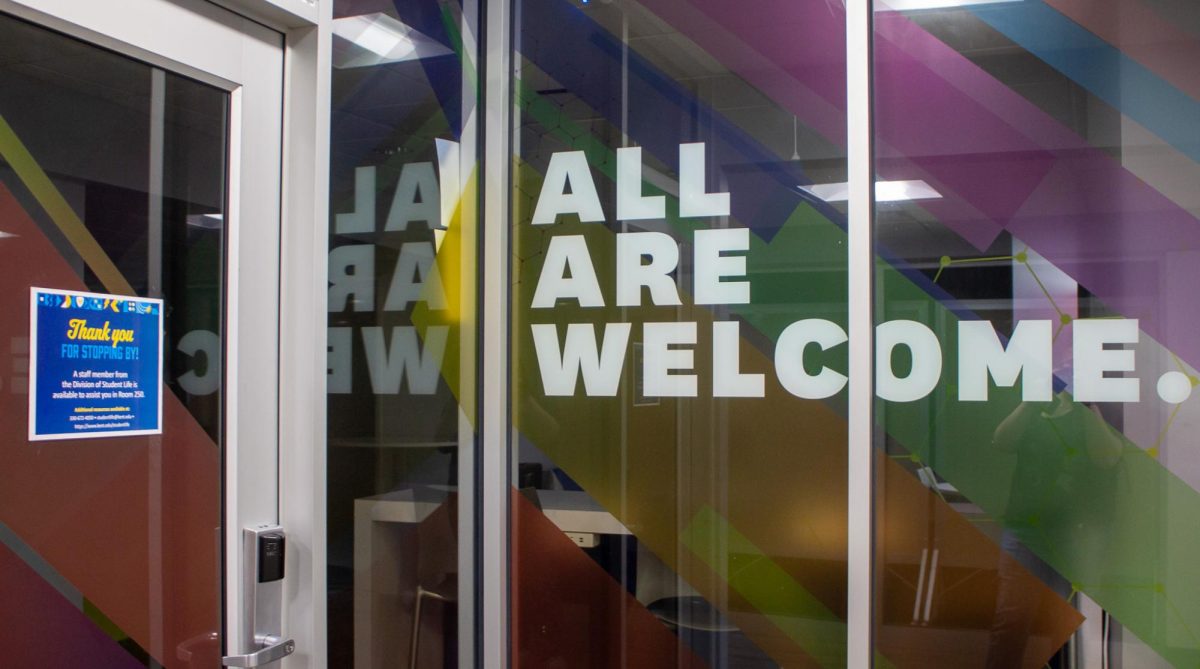
After Ohio lawmakers barred state universities from operating Diversity, Equity and Inclusion offices, pro-LGBTQ+ organizations in Northeast Ohio may be able to help fill the gap.
Ohio Senate Bill 1, commonly referred to as SB1, went into effect June 27, 2025, meaning that public universities can no longer host DEI spaces, like the Kent State University’s LGBTQ+ Center.
Despite the closure of on-campus centers, queer students have not lost all access to viable support systems. Many organizations across the Northeast Ohio area can still provide support.
LGBTCleveland, for example, is just one organization in the region focused on bringing the community together. Based in Cleveland, the center opened in 1975 and remains active today.
LGBTCleveland’s lead Advocacy Coordinator, Elizabeth Katavich, said within the year she has worked there, the center launched its new advocacy program for pro-LGBTQ+ legislation.
“Given all of the recent legislation and anti-LGBTQ+ rhetoric we’ve been seeing everywhere, my organization wanted to take a more proactive approach to it,” Katavich said.
Since the passage of SB1, they’ve seen more people coming to them for support and a sense of community, she said.
“We’ve been trying to do quite a lot of work in serving as that extra space when all of these other spaces within local public universities have been vanishing,” Katavich said. “I would wager to say, yes, we’ve had a lot more folks looking to us for different community groups, support groups and ways to get involved.”
She said the majority of their advocacy program works to make sure that queer people are informed about legislation impacting them by creating educational content and using the organization’s relationships with the community to better spread their message.
“It’s working with many other organizations locally and across the state to successfully, to hopefully, advance the rights of the LGBTQ+ community given everything that’s going on,” Katavich said.
Another part of LGBTCleveland’s mission is providing resources and programs to LGBTQ+ individuals of all ages and backgrounds. One program, Pride Recovery, supports queer individuals struggling with addiction, which approximately 20% of college students struggle with, according to a study published in late 2024 by the Recovery Research Institute.
“It’s kind of an alternative to AA and other community support group options for those with addiction but specifically tailored to the queer community,” Katavich said. “It’s all based on substance abuse and harmful behaviors. It’s one of our many support groups for various communities from various backgrounds.”
LGBTCleveland also offers a program dedicated to spreading awareness about STIs and how to prevent them through its Popular Opinion Leader program.
“They are a paid, stipended, group of individuals or community members who are tasked with essentially providing peer-to-peer education around HIV and preventing HIV,” Katavich said. “They’ll go out into the community … provide resources and education. They’re always recruiting.”
Another organization dedicated to uplifting the queer community is Full Spectrum Community Outreach, an LGBTQ+ center based in Youngstown, which plans to open the area’s first LGBTQ+ adult transitional homeless shelter. It would be the only shelter of its kind within a 40-mile radius and is set to open March 16.
“It’s going to start as an overnight shelter,” Katie Coriston, Full Spectrum’s operations manager and a KSU alumni, said. “Everyone will have to go through an intake process and then we’ll reach out to those who are qualified. They have to apply every night.”
When someone in need of shelter arrives, they will undergo an intake process involving a hotbox for bedbug killing, Coriston said, with plans to accommodate those with substance abuse issues.
“We’re talking about an anonymity box if someone does have illegal substances on them,” she said. “A lot of homeless abuse drugs to stay awake because they can’t get found sleeping on the streets or they get arrested, and there’s just the stigma of that, too … giving people a safe option of coming here. Everyone deserves a warm place to sleep.”
Full Spectrum plans to offer the people using their shelter referrals to other resources after their stay, as the shelter is starting with only four beds.
“We’re going to have food options, a little bagged breakfast in the morning when they go to leave and resources,” Coriston said. “We know that we’re going to have a lot of interest.”
She said they plan to expand the shelter to allow queer individuals to stay up to 60 days.
“We make do with just private funding. … We are 100% volunteers so we are just trying to make it work,” she said. “It’s a lot of responsibility right now. People are calling from Dayton, from Cincinnati, from Columbus and even Kentucky because there is just such a need.”
Full Spectrum often partners with Youngstown State University’s group YSUnity, a student association dedicated to empowering the LGBTQ+ community.
“We allow them to host events here at our outreach,” Coriston said. “We have invited them to do that, just trying to be inclusive of the community as well.”
It also has a food pantry in their center open to the public, not just LGBTQ+ individuals.
“That is one of our biggest accessible items that we have here,” she said. “No one deserves to be hungry. Everyone deserves food and a place to sleep so we’re doing what we can with what we have.”
Another center, The Colors+ Youth Center, focuses on improving the lives of the younger members of the queer community. Its primary audience includes queer youth ages 0 to 19, making it a valuable resource for younger university students and those who are about to start college.
Center Manager Daisy Shockley said Colors+ has seen an increase in queer college students reaching out to see what resources may be available to them.
“What I’ve seen is a lot of older youth or college students reaching out, seeing what’s available to them,” Shockley said. “If they are in their early 20s or in that college-like space, I have seen a lot more phone calls or inquiries of people asking about our programs and seeing what could be a fit for them if they needed a space to be in.”
One of the organization’s most attended programs is Connections+, a weekly event held from 4 to 6 p.m. Wednesdays at the Fairview Park Library, she said.
“It’s very much open-ended … There are no expectations,” Shockley said. “It’s very much a safe space for them to kind of do what they want within those two hours — be around like-minded peers, make new friends, just be in a comfortable environment without anybody telling them what they need to do or how they need to do it.”
Colors+ also partners with music therapists for Harmony+ Music Therapy, a program intended to boost wellness and reduce stress.
“They are a group of licensed music therapists,” she said. “We welcome them into our programs, we do the marketing, getting the word out there, hosting the space … and they come in with their supplies and they lead a music therapy program.”
As a nonprofit organization, Colors+ relies primarily on community volunteers and donations from businesses and corporations after training and a background check.
“Our volunteers do a lot of the behind-the-scenes work as well,” Shockley said. “We also do have some corporate groups who will come in and do some volunteer time as well, separate from the programs. We’ve got lots of support that way, which has been really wonderful.”
Each of these nonprofit organizations work to support and uplift the local queer community across Northeast Ohio. Each can be contacted through their websites.
Syd Yanok is a reporter. Contact her at [email protected].
