


Ohio Senate Bill 1, also known as the Advance Ohio Higher Education Act, was passed by the Ohio General Assembly and signed into law in the spring of 2025. The bill was primarily sponsored by State Senator Jerry C. Cirino, the Republican representative of Ohio’s 18th congressional district.
According to The Ohio Legislature website, the final analysis of the bill states that SB1 will place serious restrictions on implementations of DEI practices, “endorse or oppose any controversial beliefs,” and allow for students to report any professors who are accused of violating the contents of SB1.
The legislation went into action later that summer, and it has been in effect across all public Ohio college campuses for the Fall 2025 and Spring 2026 semesters. Despite Cirino claiming that programs such as DEI have “no place in our institutions of higher education,” campus leaders and professors at Kent State University have voiced concerns about how SB1 will be, and has been utilized.
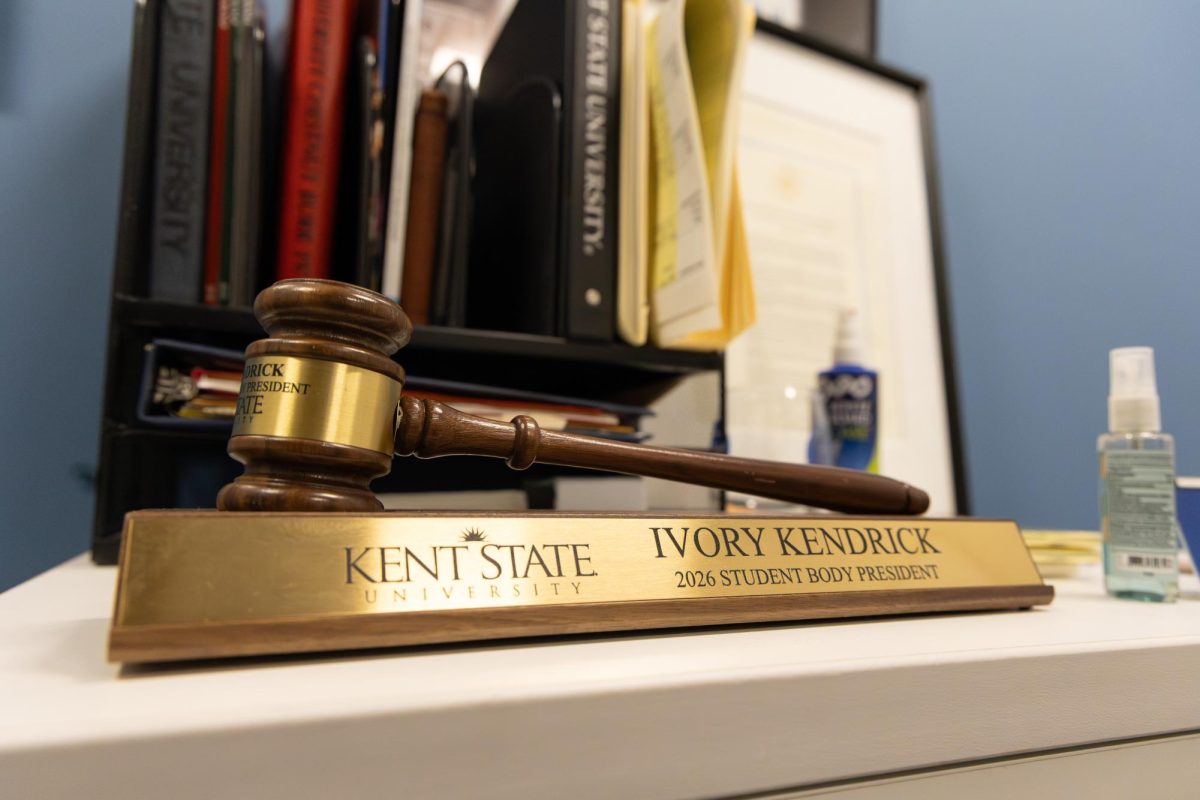
“It’s very nuanced,” said Ivory Kendrick, president of KSU’s Undergraduate Student Government. “It says you cannot talk about controversial issues, but that’s such an opinionated piece. It’s like, ok, what is a controversial issue?”
Kendrick surmises a very fair question. In the era of polarizing political discourse and education about modern topics, it would be very hard for professors to discuss something that is not inherently controversial in itself.
“They [the legislators] give examples like climate change or politics,” Kendrick said of issues SB1 discourages professors from speaking on. “These are things that influence everyday action for some of our majors. Me, as a public health major, if vaccines get deemed controversial, am I just not allowed to talk about it?”
Kendrick is not the only community figure at KSU’s campus who has raised concerns about how SB1 may affect the university. Last semester, the KSU chapter of the Ohio Student Association held a protest in which students dressed in black marched to several parts of campus, such as the Women’s Center, to mourn what was taken by SB1.
In addition to student leaders and organizers, professors have voiced concerns themselves.
“It can affect teaching in a number of ways,” said Daniel Hawes, a political science professor. “My concern with the legislation is, for most faculty, we already teach things in a neutral way. I think it might have an effect where to avoid the risk of accusations; certain faculty will not teach certain topics — I think that’s problematic for higher education.”
Hawes also voiced worries about politicians getting themselves involved with the content of what is being taught across campuses in Ohio. With the new era of SB1, the legislation leaves room for lawmakers to carefully scan syllabi for potential violators.
“I think it’s a slippery slope and unwise to have politicians get involved in the content of what is being taught in class,” Hawes said. “They’re not content experts, and whether you agree with their politics or not, it’s just a bad precedent for politicians to be doing that.”
The legislation and wording of SB1 aims to make classrooms feel more neutral and include the thoughts and opinions of all students, but it has also been questioned as a way for politicians to carry their agendas into the classroom.
“It allows citizens and even third parties, not just students taking classes, but anyone who can search for syllabi,” Hawes said. “And then look for content material that is not in line with legislative intent, and report that”.
The bill stands to affect the content of the course, but it may also change the way conversations are handled on campus. If students and faculty feel as if they should remain silent about certain issues, members of USG feel that this may have an adverse effect on the quality of education on Ohio campuses.
“One common thing I hear is that it’s making universities in the state of Ohio less competitive,” said Richard Skains, the Director of Governmental Affairs for USG. “Universities are typically well-known for intellectual diversity and encouragement of thought, Senate Bill 1 does hamper that.”
Along with potential points of contention in the classroom brought by SB1, members of USG also took issue with how the legislation affects identity-based groups.
“If a department were to sponsor Pride! Kent, they would have money to do what they need within the organization,” Kendrick said. “Because of Senate Bill 1, there can be no sponsoring or money flow between the department and an organization.”
The passing of SB1 also officially ended the DEI-era on college campuses. While some, like Cirino, viewed the practices of DEI as “institutionalized discrimination at the taxpayers’ expense,” members of USG view the removal of these policies as taking away options from students.
“It has brought up the importance of people talking about how important DEI stuff was,” said Cass Popp, USG Senator at Large for Residence Halls. “So many people don’t feel seen anymore, and overall, that’s just an important discussion.”
The discussion around Senate Bill 1 will not go away anytime soon. With the continuance of political debate across campuses throughout Ohio, Kendrick is aiming to stay positive.
“It’s scary… once you let it get a hold of you, you really can’t escape it,” Kendrick said. “My mindset is that you can’t let it get a hold of you. You can’t let the fear get to you.”

